
Ecological value
Elnoka wildland provides valuable ecosystem services for free . . .
HABITAT FOR NATIVE SPECIES
Elnoka’s oak woodlands and grasslands harbor bobcats, foxes, coyotes, jack rabbits, as well as migratory and nesting birds including California quail, great horned owls, egrets, woodpeckers, scrub jays, and turkey vultures. The introduction of dense housing, roads and domestic pets would have a detrimental effect on bird populations, at a time when these populations are crashing at the global scale.
Elnoka is crossed by three creeks—Annadel Creek, Oakmont Creek, and Melita Creek— which provide riparian habitat for special-status species, including the California giant salamander, red-bellied newt, foothill yellow-legged frog, and western pond turtle. Large portions of Elnoka’s grassland are low and marshy, with 4-6” pools (shown in the video) remaining wet during the rainy months. This creates the groundwater recharge that replenish Elnoka’s creeks.

Western blue-eyed grass (Sisyrinchium bellum) blooms across Elnoka’s spring grasslands, where roads and two-story houses would replace these moisture-loving plants without major development revisions.
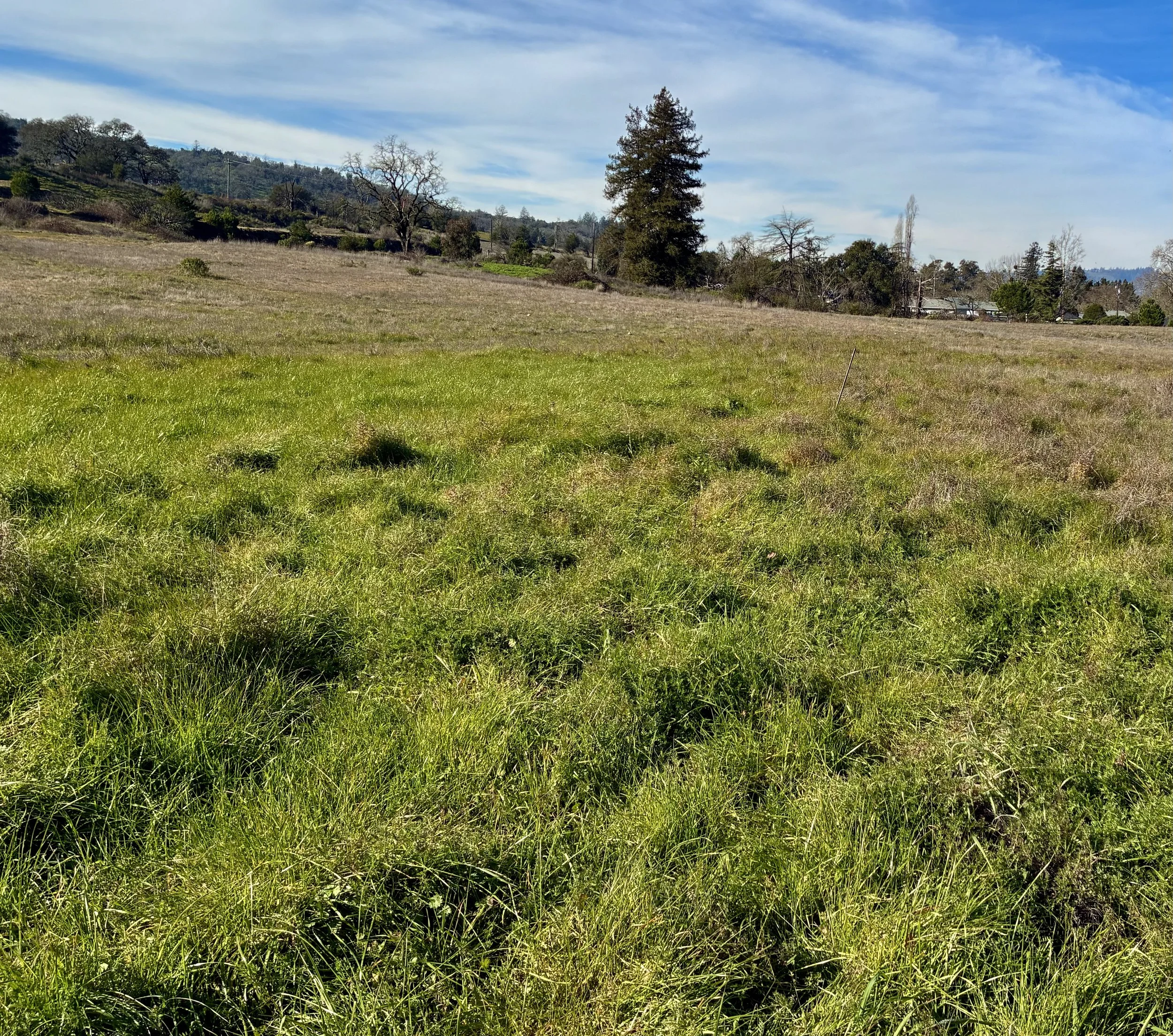
Wet marshy areas provide habitat for special status birds and amphibians as well as retain water for groundwater recharge.
NATURAL DEFENSE
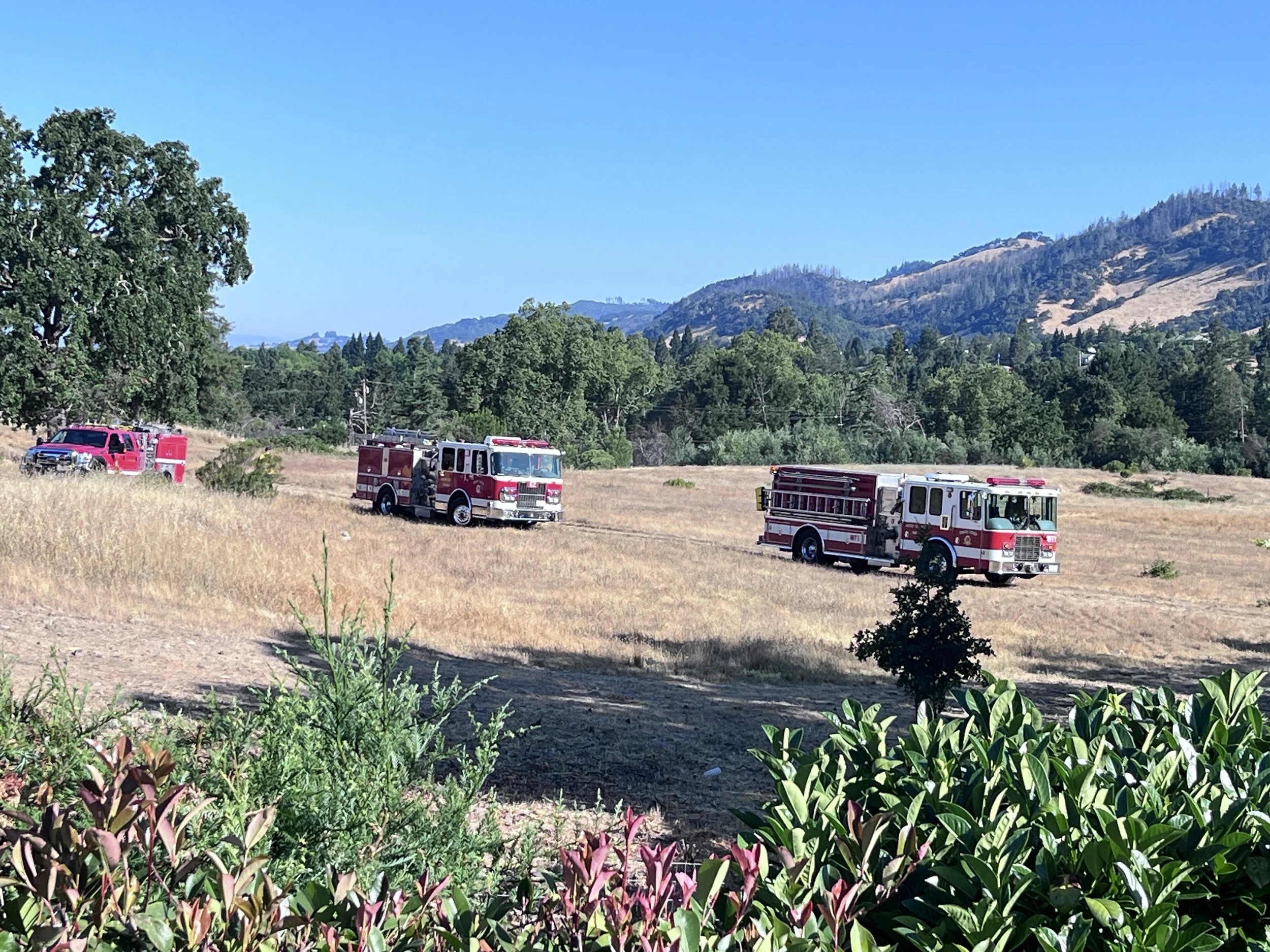
Protected open spaces can slow or halt fires, giving residents more time to evacuate and firefighters more time to respond. They also give firefighting equipment room to maneuver and create safer access points, helping crews use these natural buffers to their advantage and reduce the risk of flames reaching nearby homes. The area can also support fire training, giving crews a realistic space to practice emergency response.
GROUNDWATER RECHARGE
Elnoka’s extensive grasslands and seasonal wetlands serve as invaluable groundwater recharge … that service would be seriously degraded if more than half of this grassland is covered with houses and roads.